

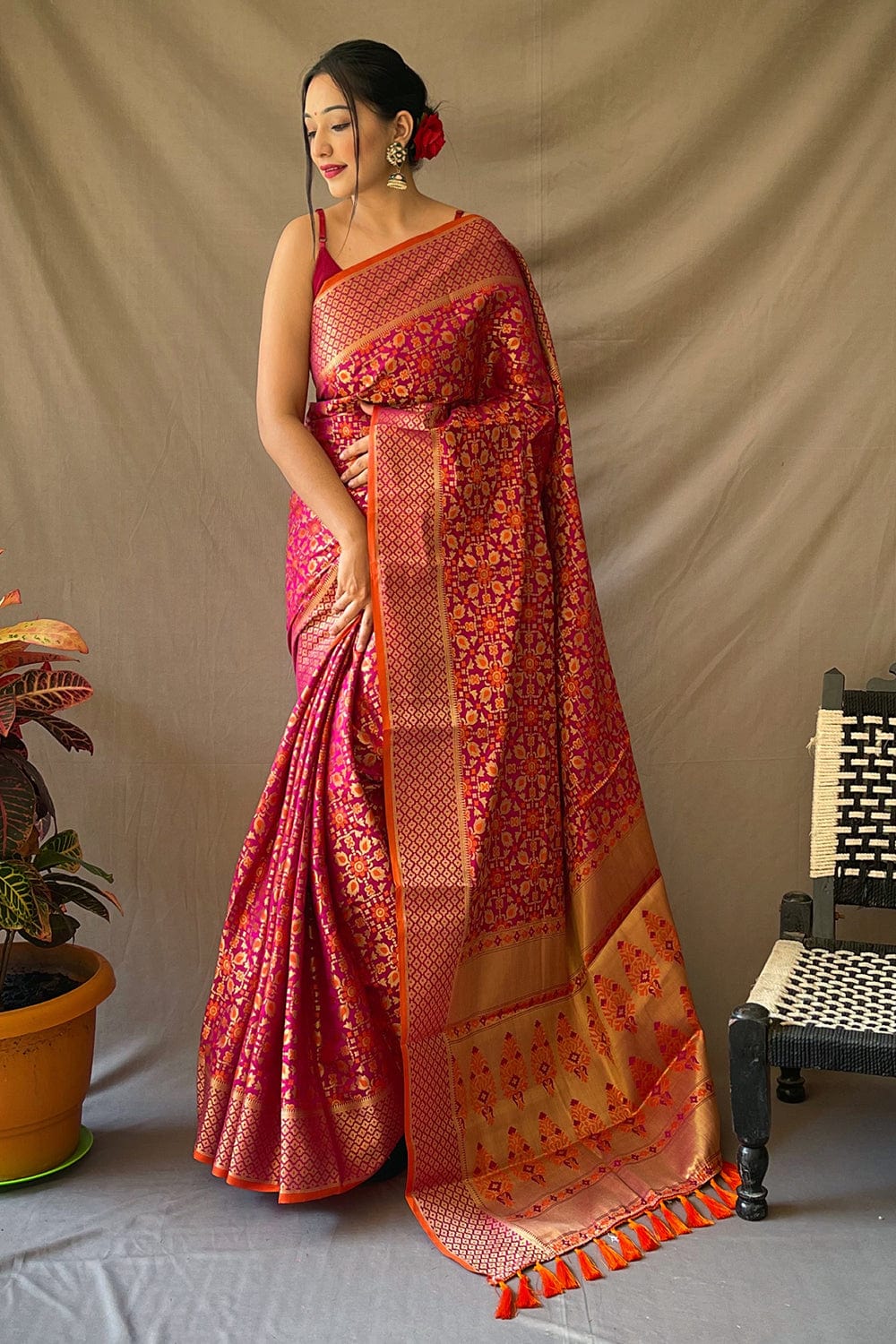
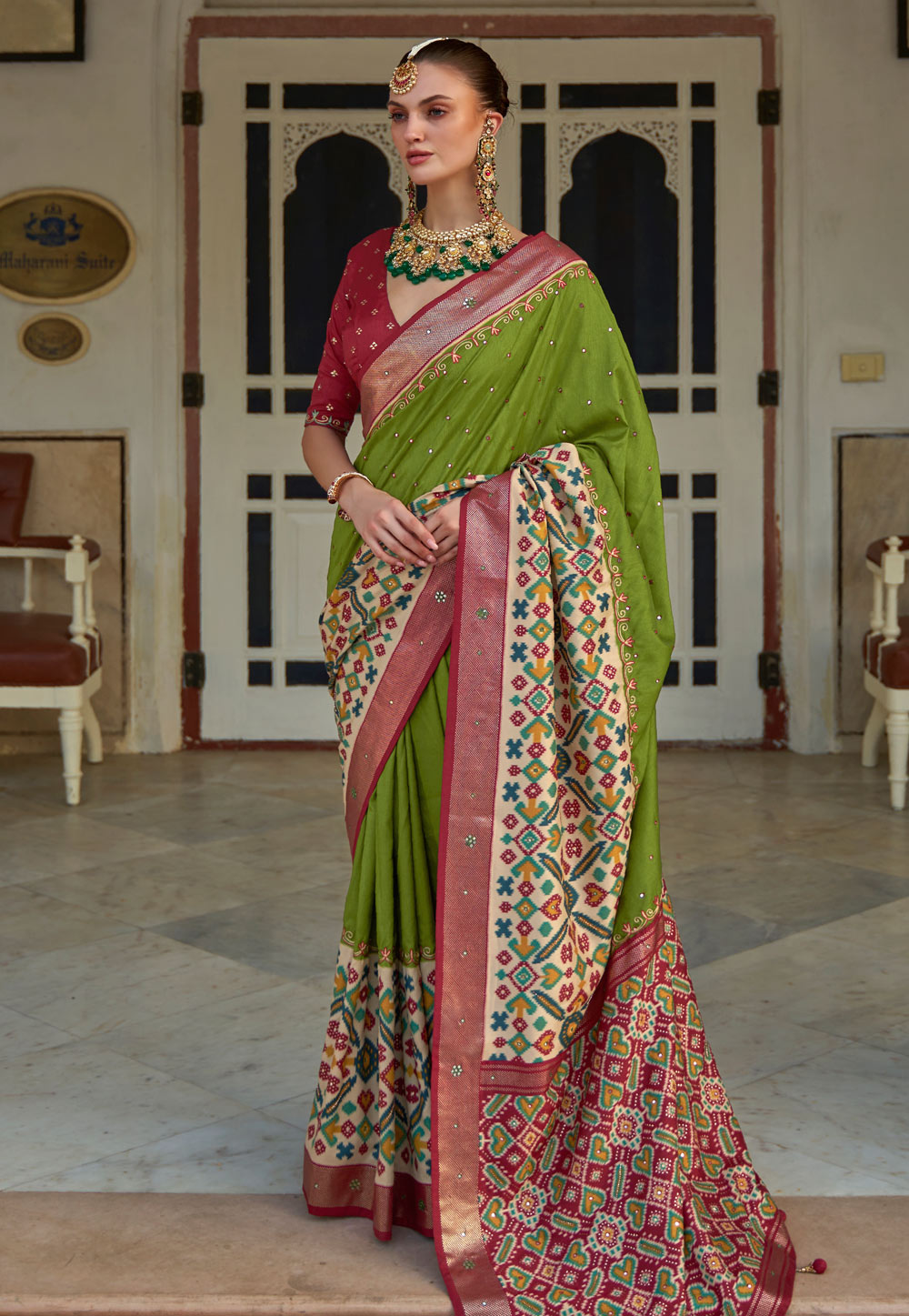
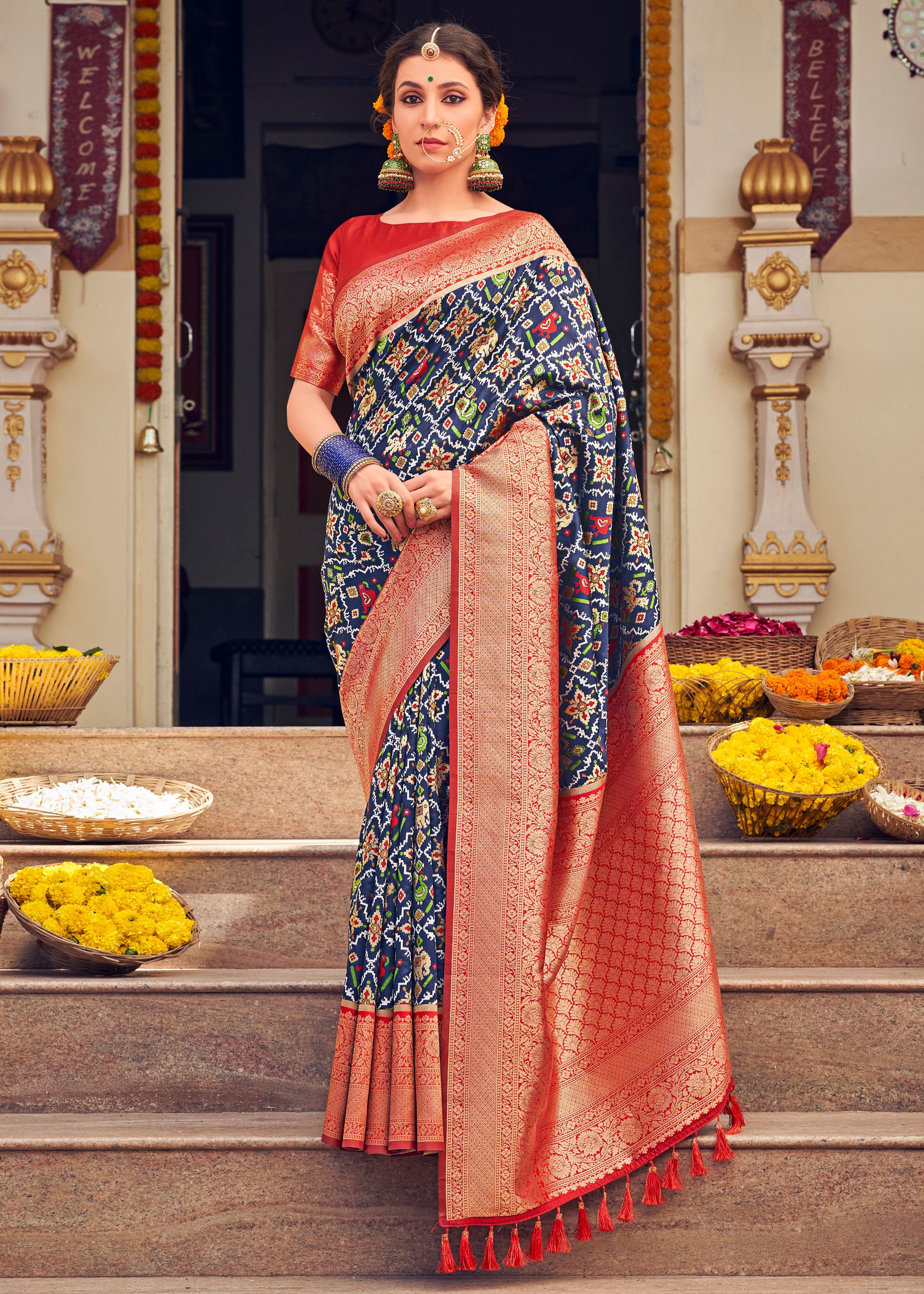
Karagari magenta saree
A Potala saree is a type of traditional handwoven saree that reflects rich Indian craftsmanship and heritage. However, the exact description can vary depending on the region or weaving tradition, since “Potala” is not one of the most mainstream saree categories (like Kanjivaram, Banarasi, or Sambalpuri). There are two main interpretations of the term “Potala saree” seen in usage: --- 🧵 1. Assamese Potala Saree Origin: Assam, India Fabric: Usually handwoven on a traditional loom using cotton or silk-cotton blends. Texture: Lightweight and soft, suitable for hot climates. Design: Characterized by simple, elegant motifs, often in geometric or floral patterns. Borders and pallus are subtly woven with contrasting colors. Colors: Typically found in pastel shades or earthy tones with elegant woven borders. Occasion: Perfect for daily wear, traditional events, and festive occasions. --- 🌸 2. “Potala” as Inspired by Tibetan or Himalayan Aesthetics Some designers use the name Potala (after the Potala Palace in Tibet) for sarees inspired by Tibetan art, colors, and textures: Design theme: Rich, spiritual, and vibrant — drawing from Buddhist motifs and mountain hues. Fabric: Often made of silk, tussar, or wool-silk blends to create a textured, regal look. Colors: Deep reds, saffrons, golds, and creams—echoing the Potala Palace’s color scheme. Use: Designer or statement sarees for cultural or festive wear .
- SKU: PR_20251110_10005
- CATEGORY: Patola Saree
A Potala saree is a type of traditional handwoven saree that reflects rich Indian craftsmanship and heritage. However, the exact description can vary depending on the region or weaving tradition, since “Potala” is not one of the most mainstream saree categories (like Kanjivaram, Banarasi, or Sambalpuri). There are two main interpretations of the term “Potala saree” seen in usage: --- 🧵 1. Assamese Potala Saree Origin: Assam, India Fabric: Usually handwoven on a traditional loom using cotton or silk-cotton blends. Texture: Lightweight and soft, suitable for hot climates. Design: Characterized by simple, elegant motifs, often in geometric or floral patterns. Borders and pallus are subtly woven with contrasting colors. Colors: Typically found in pastel shades or earthy tones with elegant woven borders. Occasion: Perfect for daily wear, traditional events, and festive occasions. --- 🌸 2. “Potala” as Inspired by Tibetan or Himalayan Aesthetics Some designers use the name Potala (after the Potala Palace in Tibet) for sarees inspired by Tibetan art, colors, and textures: Design theme: Rich, spiritual, and vibrant — drawing from Buddhist motifs and mountain hues. Fabric: Often made of silk, tussar, or wool-silk blends to create a textured, regal look. Colors: Deep reds, saffrons, golds, and creams—echoing the Potala Palace’s color scheme. Use: Designer or statement sarees for cultural or festive wear .